What Is the $3,000 Rule for Car Repairs? | Killeen, TX Mechanic
What the $3,000 rule actually means, tested against 14,483 real repair orders from our Killeen shop
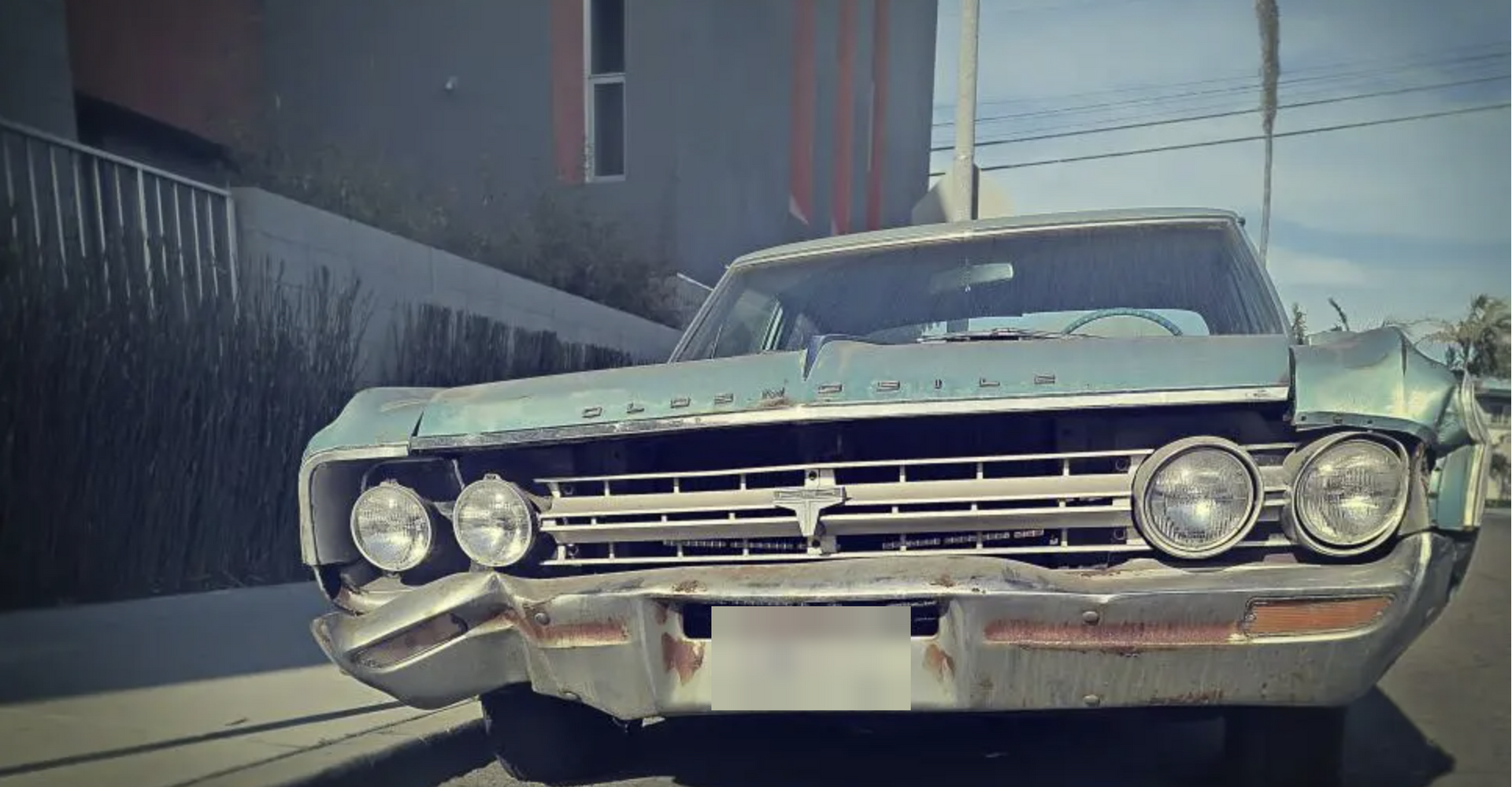
You’re standing at the counter holding an estimate for $3,400 on a truck you already paid off, and somebody at work told you there’s a rule: once a repair hits $3,000, get rid of the car. It sounds clean. It sounds like math. Search “mechanic near me” in that moment and you’ll find a dozen articles repeating it without a single real repair bill behind them.
Here’s the straight answer from an auto repair shop in Killeen that has been writing these estimates since 2010: the $3,000 rule is a conversation starter, not a decision. It is a rule of thumb somebody made up. It is not a law, not an industry standard, and not something any manufacturer publishes.
In this post you’ll learn where the rule came from, the two different versions people actually mean, the three numbers that matter far more than $3,000 — and what our own repair orders show about drivers who followed it and drivers who ignored it. Every example below is a real job from our shop, cited by repair order number instead of a customer name.
What the $3,000 Rule for Car Repairs Actually Says
The rule exists in two versions, and people arguing about it are usually arguing about different ones. Like the 30/60/90K rule for cars, it’s shorthand — genuinely useful as a prompt, useless as a formula.
Version 1: The single-repair trigger
One estimate lands at or near $3,000, and that number is your cue to stop and compare the repair against what the car is actually worth and how much life it has left. Note what this version does not say: it doesn’t say don’t fix it. It says don’t autopilot it.
Version 2: The $3,000-per-year trigger
This one applies to higher-mileage cars and is the version most commonly repeated online. Once you’re past roughly 150,000 miles, add up what you’ve spent on repairs over the last twelve months. If the total is over $3,000 a year, you’re funding a car that’s consuming more than it’s returning. Under $3,000 a year on a car you like and know? Keep it and aim for 10 to 12 years of ownership.
The rule it gets confused with: the 50% rule
The older and more defensible guideline compares the repair to the car’s market value rather than to a flat dollar figure. As Credit Acceptance explains in its breakdown of when to fix a car or sell it, “Selling a car may be the better option if the repairs cost more than 50% of its current market value.” That scales, and $3,000 doesn’t. A $3,000 repair on a car worth $4,000 is a hard conversation. The same $3,000 on a car worth $18,000 is barely a question.
The math nobody does at the counter
Divide the repair by the months you plan to keep the car. A $3,000 repair on a vehicle you’ll drive three more years is about $83 a month. Then price a dependable replacement the same way — payment, full-coverage insurance, registration and sales tax. That comparison changes minds more often than the $3,000 rule ever does.
What 14,483 Repair Orders Tell Us About $3,000 Repairs
We pulled our own numbers for this post rather than guessing. Across 14,483 posted repair orders at our Killeen shop from September 2014 through October 15, 2026, the median ticket is $294.41. Only 637 of those repair orders — about one in twenty-three — ever crossed $3,000. In 2026 so far, 129 of 1,256 posted repair orders crossed it, closer to one in ten.
So the first honest thing to say about the $3,000 rule is that most repairs never get near it. When one does, here’s what it has actually looked like on our lifts.
When $3,000-plus was clearly the right call
RO 20200 — 2020 Jeep Cherokee Latitude Plus, 3.2L V6, 69,901 miles, $4,408.48. Came in with a P1E23-00 gear ratio code and a month-old leak. Our tech ran it to operating temperature, performed a line pressure test, then test drove it watching live data: “for the most part vehicle shifts very hard between gears.” The fluid told the rest of the story — excessive metallic shavings and clutch material. That’s a transmission, not a service. We installed a used assembly with 34,000 miles on it, replaced the rear main seal while the transmission was out, and chased out subframe threads a previous shop had ruined. The part that matters: the customer’s SilverRock extended warranty covered the transmission. Before you let a $4,000 estimate talk you into a trade, dig out your paperwork and check whether a factory, extended or dealer-sold warranty is still in force — plenty of drivers who bought used don’t realize they have one. Our transmission replacement service in Killeen page explains what the job involves.
RO 20512 — 2018 Jeep Compass Latitude, 61,086 miles, $5,351.88. Arrived overheating with a dent in the bottom of the radiator stopping the fans, then wouldn’t start at all. Tech notes: fuses on the battery junction box “were not tight and arcing,” and the battery wouldn’t take a charge after four hours. Final bill covered battery and junction box, radiator, condenser and a radiator fan assembly with an internal failure — over $5,000 on a car with 61,000 miles. Nobody here suggested trading it, and the rule shouldn’t either.
When the number lands right on the line
RO 18784 — 2008 Mazda CX-9 Touring, 167,472 miles, $3,011.11. This is the textbook case: eleven dollars over the line on a car with 167,000 miles. The customer asked us to check over the whole car for a front-end noise. Our tech found both front struts with center bolts loose and threads rolled past repair, lower control arms cracking with ball joint play, and — during disassembly — the right front wheel bearing came apart in his hands. Struts, control arms, hub and bearing, alignment and an oil change came to $3,011.11, and the car drove normally on the test drive.
Here’s the part the $3,000 rule can’t see: the same inspection also flagged worn inner and outer tie rods and a leaking steering rack that were not repaired on this visit. That’s the real question at $3,000 — not “is this bill too big,” but “what’s the next bill, and the one after that?” A good shop will tell you. Ours puts it in writing on the estimate.
When it was never one repair
Three of our biggest tickets had nothing to do with a single catastrophic failure. They were deferred maintenance arriving all at once.
RO 19988 — 2006 Dodge Charger R/T 5.7L HEMI, 133,660 miles, $7,266.29. Fifteen authorized jobs. The intermittent stalling traced back to an alternator not charging in spec, draining the battery under load — but the alternator itself was only $720.86 of this bill. Removal became its own repair: the bolts were seized into the alternator, one snapped off, and the other two had damaged threads from a previous install. Extracting the broken bolt and repairing the alternator mounting bracket meant pulling the engine front cover, and that single line came to $2,014.37 — more than the alternator and the stalling diagnosis combined. Add a water pump with broken bolts, a tune-up with ignition coils, worn front pads and rotors, a dry-rotted air intake coupler, and cooling, fuel and air induction, rear differential and transmission services.
That’s the honest shape of a $7,266 bill: one failing part, one previous bad repair, and years of deferred maintenance all arriving in the same week.
RO 18934 — 2011 Chevrolet Avalanche LT, 130,178 miles, $9,340.49. Our largest example here, and every line of it was suspension and fluid: both front wheel hubs, front and rear shocks and struts, upper and lower control arms on both sides, front and rear stabilizer links, rack and pinion with outer tie rods, a transmission mount and leaking valve cover gaskets.
RO 20460 — 2012 Toyota RAV4, 231,393 miles, $5,331.97. Towed in with the A/C dead, a clunk in the left front and a no-start — the clearest fit here for the yearly version of the rule. The repair also grew mid-job: the axle nut threads stripped away during wheel bearing removal and took both CV axles and the output shaft seals with them. That happens on high-mileage vehicles, and an honest shop warns you it might before you authorize.
When a paid-off work truck beat the rule outright
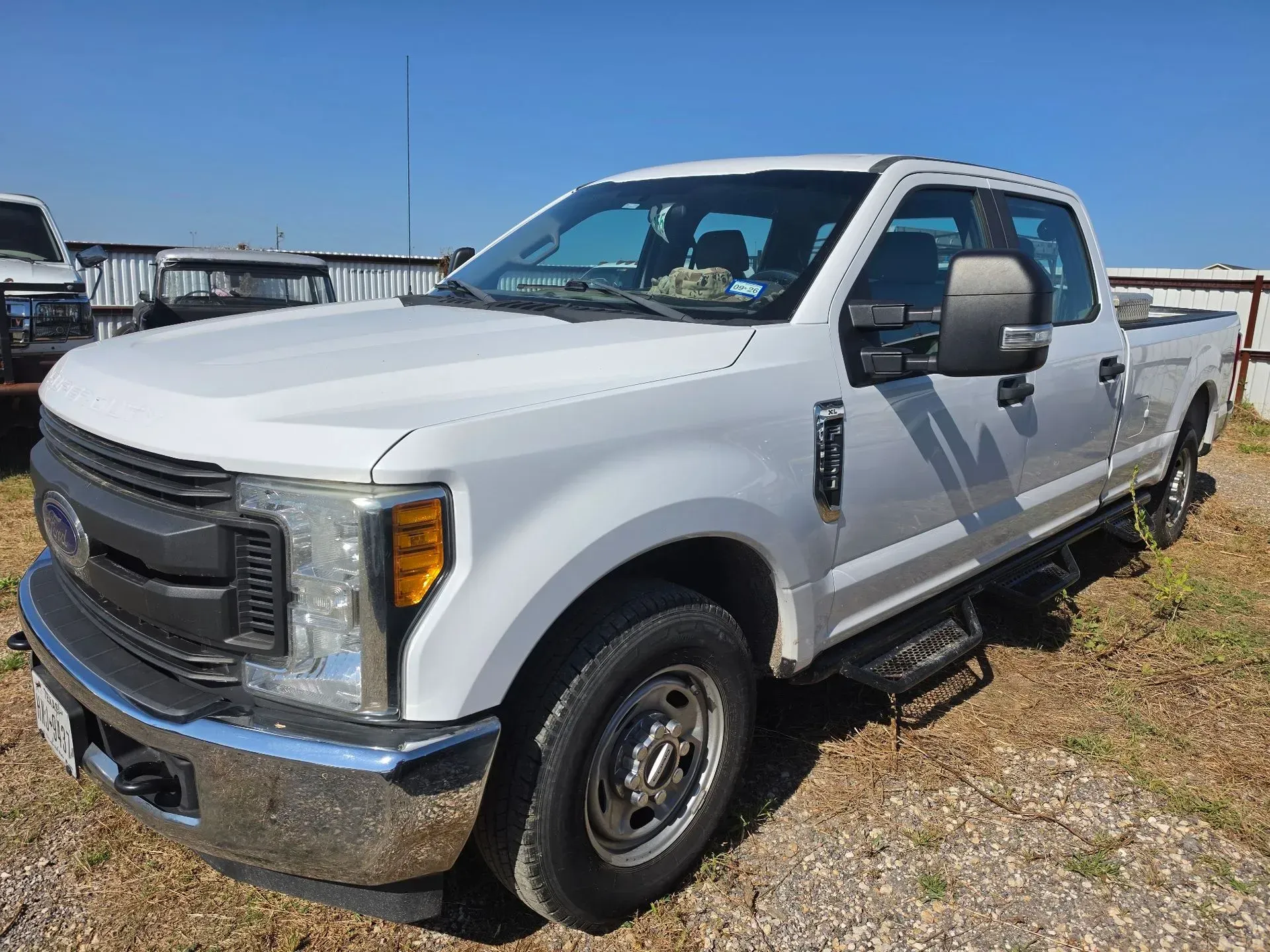
RO 19653 — 2000 Ford F-250 Super Duty XLT, 6.8L V10, 167,274 miles, $4,669.48. The customer clipped a curb reversing in a hard left turn. Our tech’s findings read like a list: front shock bent at the mounting area, U-bolts bent and shifted off center, a leaf spring missing a leaf, a bent sway bar end, both wheel hub bearings worn with excessive play, the leaf spring mounting pin no longer present on top of the axle, a worn steering damper and both outer tie rods worn. Then the wheels rubbed on the road test after the factory parts went in, so a leaf-spring leveling kit went on to correct ride height. Over $4,600 — and still the right call, because you cannot replace a paid-off three-quarter-ton work truck for $4,669.
The $2,641 repair that cost more than $3,000 would have
RO 12965 — 2009 Dodge Challenger R/T 5.7L, 118,769 miles, $2,641.70. Under the line, and still the worst outcome in this post. Diagnosis found a P0340 cam position code, no signal on the lab scope, no compression in the cylinder we checked, and an intake efficiency test showing the intake wasn’t pulling air. The customer supplied their own crate engine to keep the bill down — no warranty, by agreement. It went in correctly and would not start. On teardown: the engine was missing its MDS sensors and its engine code came out of a 2015-or-newer vehicle, so the reluctor wheel was different from the 2009 and produced no crank signal.
If you’re trying to duck the $3,000 rule by sourcing your own parts, read that paragraph twice — then read our answer to whether cheap online car parts are safe to use. Picking a shop that will tell you no is worth more than saving $600 on a long block, which is exactly why we wrote how to choose an auto repair shop in 5 checks.
Frequently Asked Questions About the $3,000 Rule
Is the $3,000 rule a real rule? No. It’s an informal rule of thumb with no governing body, standard or manufacturer behind it. Treat it as a prompt to get your car’s current value and a written estimate, not as a verdict.
What is the 50% rule for car repairs? It says to consider selling when a repair costs more than half the car’s current market value. It’s more useful than the $3,000 rule because it scales with what your vehicle is actually worth.
Should I fix a car with over 200,000 miles? Sometimes — our RAV4 example at 231,000 miles is a real repair we performed. The question is whether the car is otherwise sound and whether the work buys you years or months. Ask your shop which it is.
Is it cheaper to repair my car or buy another one? Usually repair, and the gap is wider than people expect. Divide the repair across the months you’ll keep the car and compare it to a payment plus full-coverage insurance, tax and registration on a replacement.
Does a big repair bill mean my car is unreliable now? Not necessarily. A single large repair on a well-maintained vehicle is different from $3,000 a year in small failures across different systems. The pattern matters more than the one bill.
Pros and Cons of Using the $3,000 Rule
Pros
- It forces a pause. The rule’s real value is stopping you from authorizing a large repair on reflex. Any number that makes you check your car’s value before you sign is doing useful work.
- It’s easy to remember. You don’t need a spreadsheet at the service counter, and a rough rule you’ll actually use beats a precise one you won’t.
- It surfaces the pattern. The yearly version makes you add up twelve months of repairs, and that total is often the genuine eye-opener.
- It nudges you toward a second opinion. If a repair is quoted near $3,000, you should be getting a written estimate and another set of eyes. The rule prompts both.
Cons
- $3,000 isn’t scaled to anything. It ignores your car’s value, mileage, condition and what a replacement would cost — the only four things that actually matter.
- It doesn’t separate safety from convenience. Brakes, steering and suspension aren’t optional. Our CX-9 at $3,011.11 was struts, control arms and a bearing that came apart in a tech’s hands.
- It punishes paid-off vehicles. Spending $4,669 on a truck you own outright usually beats taking on a loan, and the rule can’t see that.
- Inflation ate it. A fixed dollar figure doesn’t survive a decade of parts and labor costs — which is exactly why our own share of $3,000-plus tickets went from one in twenty-three to one in ten.
- It assumes the estimate is accurate. A rule applied to a bad diagnosis is just a confident wrong answer, which is why skill matters when you’re paying for a diagnosis — and why a proper inspection comes before any rule.
Why Killeen Drivers Trust Chuck’s Garage When the Estimate Gets Big
The $3,000 rule only works if the number you’re applying it to is right. That’s the whole job of a good repair shop, and it’s why our estimates name the part, the finding and the tech’s reasoning — the notes quoted throughout this post are the same documentation every customer gets.
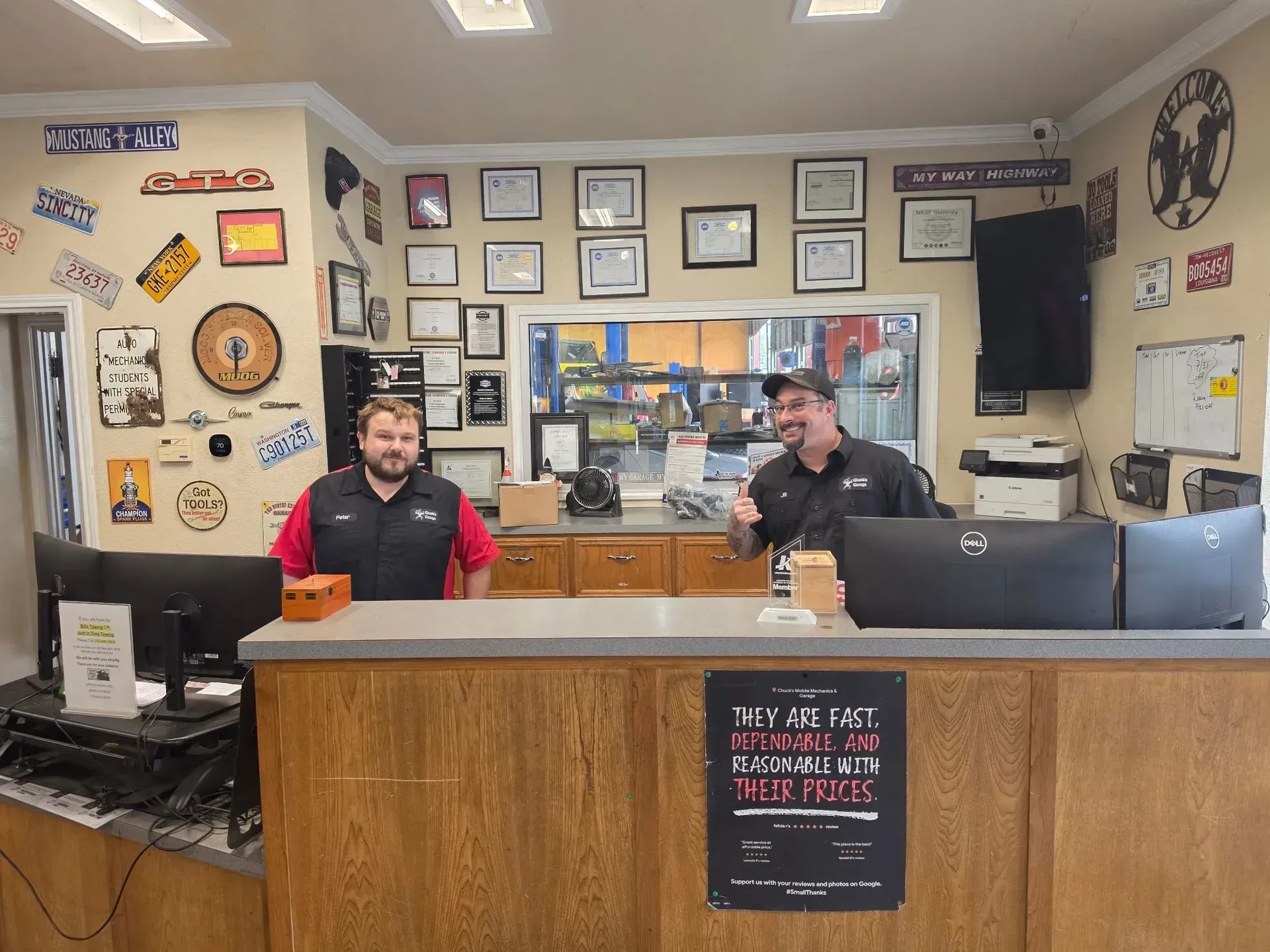
Since 2010, our ASE-certified team has been the shop Killeen turns to for auto repair, with a 4.8-star Google rating, a BBB A+ rating and Ambassador-level membership in the Killeen and Harker Heights Chambers of Commerce. We serve working families, contractors and Fort Cavazos soldiers across Killeen, Harker Heights and Copperas Cove — see every make and model among the vehicles we service at Chuck’s Garage.
If your car won’t move, our free towing integration with Bill’s Towing gets it here — the RAV4 above arrived on a Bill’s truck. Not sure whether you’re facing a $300 repair or a $3,000 one? Start with our free No Wrench inspection, a visual check with no teardown. Facing a transmission-sized number? We offer financing through Affirm, Snap Finance, Synchrony and Klarna, and every repair is backed by our 5-year/unlimited-mileage warranty. We also handle your Texas state inspection — what plenty of folks still search as a “smog check.” And if replacing the car really is the answer, our pre purchase inspection has caught worn CVTs and flood damage before money changed hands.
Searching mechanic killeen tx, car repair killeen or garage near me? You just found an auto mechanic near me that shows its work.
Get a Real Number Before You Decide
Don’t let a made-up rule decide the fate of a car you can afford to keep — and don’t let a bad estimate talk you into one you can’t. Bring it to Chuck’s Garage, Killeen’s trusted ASE-certified auto repair shop, and we’ll tell you what’s actually wrong, what it costs, and what’s coming next. Call 254-554-5445 today or stop by. We’ll get you back on the road.