What a Full Car A/C Service Looks Like
What a Full Car A/C Service Looks Like
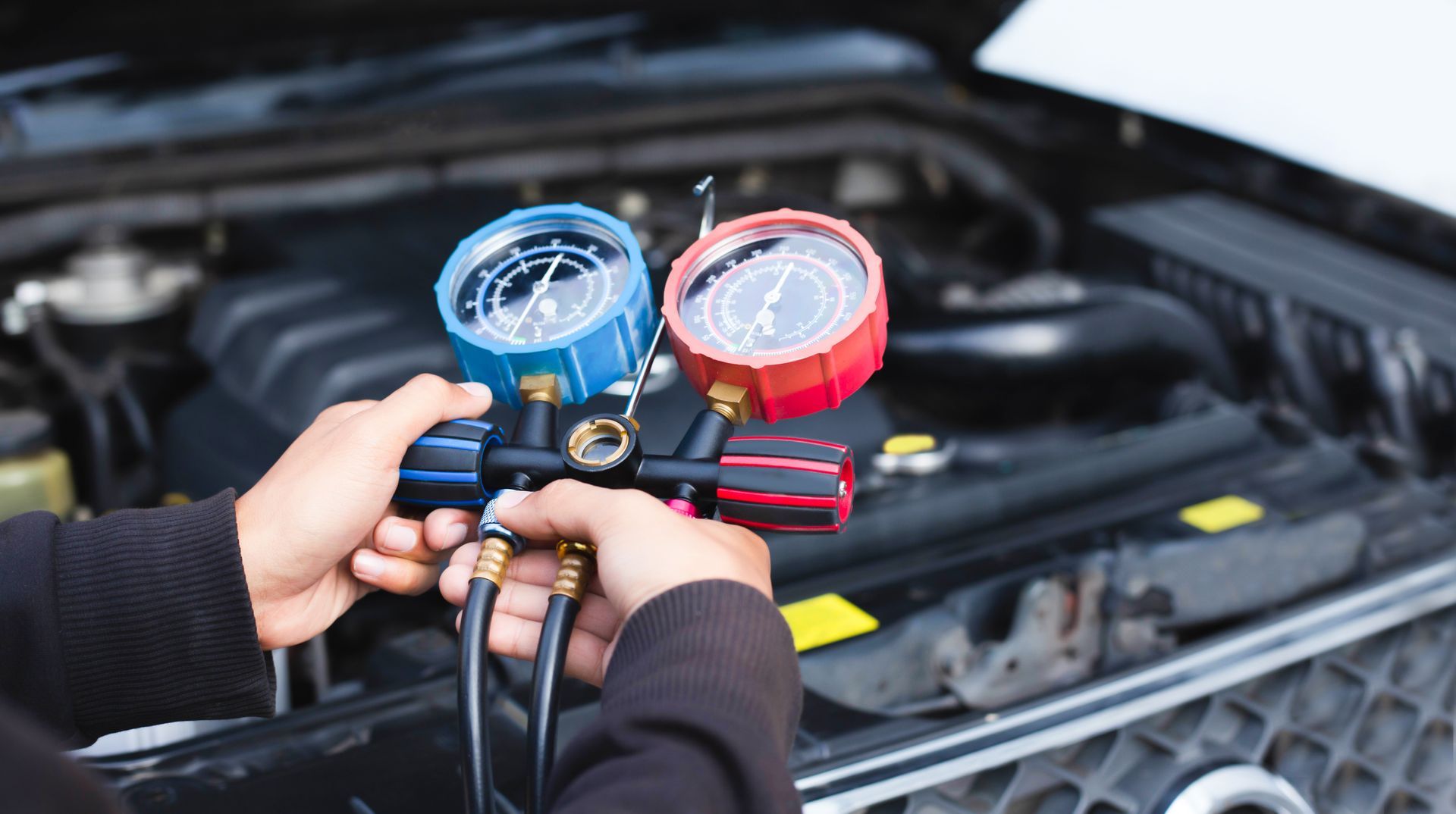
What a full car A/C service looks like at Chuck's Garage in Killeen involves complete refrigerant removal, precise weight measurements, leak testing, and comprehensive system diagnosis—not just topping off refrigerant like quick-fix shops.
Last week, a customer came in asking for a simple refrigerant top-up. Once I got into the process, I discovered multiple leaks in the lines. The customer had been having it topped off regularly at other shops without anybody looking deeper. After we repaired those leaks, they saved money because the system finally operated correctly.
This experience illustrates why understanding what proper A/C service entails can save you hundreds of dollars and prevent major system failures.
Why 'Just Topping Off' Your A/C Is a Red Flag
When customers mention they frequently "top off" or add freon every spring, that's a red flag I recognize immediately.
Air conditioning systems are sealed units. If your system needs more refrigerant, there's an active leak that's damaging the compressor and wasting your money—not a routine maintenance need.
I've seen customers spend $50-80 every few months on refrigerant top-offs at quick-lube places, only to discover multiple line leaks that could have been repaired once for less than what they spent on repeated "fixes." The real problem isn't just wasted refrigerant money; running a system low on refrigerant destroys the compressor over time.
Proper diagnosis saves money versus repeated quick fixes because we identify and repair the actual problem. Instead of paying for temporary relief every few months, you get a permanent solution that restores efficiency and prevents expensive component failures.
The Complete A/C Service Process
Most customers are surprised that a full A/C service includes completely removing and weighing the refrigerant, rather than just "topping it off."
Modern A/C systems are so precise that the only way to know if the charge is correct is to vacuum the system entirely and measure the exact weight of gas put back in. I use recovery machines that capture every ounce of existing refrigerant, then create a complete vacuum to test for leaks.
This vacuum leak testing reveals problems that aren't obvious when the system is pressurized. If the system can't hold a vacuum for the required time, there's a leak that must be found and repaired before adding new refrigerant.
The process involves removing all refrigerant, checking system pressures, testing for leaks, replacing filters and checking belts, then precisely recharging with the manufacturer-specified amount. No guesswork—just exact measurements that ensure optimal performance.
How Newer Cars Changed A/C Service
The biggest shift in auto A/C service comes from the transition from R-134a refrigerant to R-1234yf, which is standard in almost all newer vehicles.
Newer vehicles tie the A/C system into the vehicle's computer network to manage fuel efficiency, using variable-displacement compressors. Diagnosing a warm cabin in a newer BMW is often an electrical and software troubleshooting process, whereas older cars were mostly mechanical and pressure-driven.
The newer R-1234yf refrigerant costs significantly more than the older gas. A full evacuation and recharge on a newer model costs substantially more in material costs alone.
Precision requirements have increased dramatically. Older R-134a systems allowed for more margin, but newer R-1234yf systems are highly sensitive to exact charge levels. I must use automated recovery machines that won't allow a recharge if the system fails a vacuum leak test.
Working on modern Mercedes-Benz or Honda vehicles requires different equipment, training, and diagnostic approaches than A/C systems from even five years ago.
The Hidden Damage Simple Neglect Causes
The most common mistake I see car owners make is neglecting filter changes, which reduces airflow and forces the system to work twice as hard.
During regular maintenance, I catch this before it triggers major disasters like a frozen evaporator coil, burned-out blower motor, or cracked compressor. What starts as a $20 filter replacement can cascade into thousands in repairs if ignored.
Dirty coils and clogged condensate drain lines are also easily prevented through routine cleanings. I've seen customers face sudden system failures and water damage because these basic maintenance items were overlooked.
The hidden damage happens gradually. A clogged filter makes the blower motor work harder, generating more heat and stress. Reduced airflow causes the evaporator coil to freeze, which can crack when it thaws. Meanwhile, the compressor struggles to maintain pressure in a system that can't move air efficiently.
Why the 'Domino Effect' Makes Full Service Worth Every Dollar
The A/C system operates as a whole, with each component playing its part. Repairing one component while ignoring problems elsewhere can damage the entire system.
During complete services, I identify components near failure and prevent a catastrophic domino effect. Catching a failing pressure switch before it causes the compressor to cycle improperly can save the compressor, condenser, and evaporator from damage.
I've seen a $150 expansion valve replacement turn into a $1,200 complete system rebuild because the customer waited until the compressor seized. When one major component fails, it often sends debris throughout the system, contaminating other parts.
Cost comparison tells the story: preventive full service typically runs $200-400, while emergency repairs after cascade failures can easily reach $1,500-2,500.
The One Thing You Must Do Before Bringing Your Car In
Note exactly when and how the A/C fails. Knowing whether it blows warm only at stoplights, takes 10 minutes to get cold, or stops working after an hour gives me the exact clues needed to pinpoint the issue quickly.
These specific symptoms help me target the diagnosis immediately:
- Warm air only at idle suggests condenser fan issues
- Long cool-down times indicate low refrigerant or expansion valve problems
- Intermittent cooling often points to electrical or pressure switch failures
- Gradual performance loss typically means leaks or clogged components
Detailed observations save you diagnostic time and money because I can focus testing on the most likely causes rather than running through every possible scenario.
What to Expect During Your Visit
When you bring your vehicle in for what a full car A/C service looks like at Chuck's Garage in Killeen, we start with a comprehensive system evaluation, not just adding refrigerant.
First, I connect diagnostic equipment to check system pressures and temperatures while running. This tells me immediately if we're dealing with refrigerant levels, airflow restrictions, or component failures. Then comes the complete evacuation process—removing all refrigerant to weigh it and check for contamination.
I communicate findings as I discover them, explaining what each issue means for your system's performance. Rather than just fixing today's problem, I focus on preventing future issues by addressing underlying causes like dirty coils, worn belts, or marginal components.
The vacuum leak test comes next, followed by precise recharging with the exact manufacturer-specified amount. Finally, I test system performance under various conditions to ensure everything operates correctly before you drive away.
Our approach prioritizes preventing future problems over quick fixes because properly maintained A/C systems last significantly longer and perform more efficiently.
Ready to experience the difference between a quick refrigerant top-off and a comprehensive A/C service? Contact us to discuss your vehicle's A/C concerns. We're committed to keeping you cool with solutions that last, not temporary fixes that waste your money.
Call Chuck’s Garage at (254) 554-5445 to schedule an appointment.