What Questions Should I Ask My Mechanic?
The two questions we wish every customer asked — answered with real repair orders from our Killeen shop.

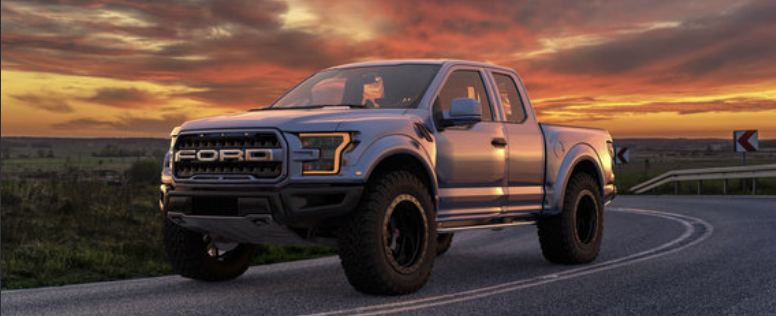
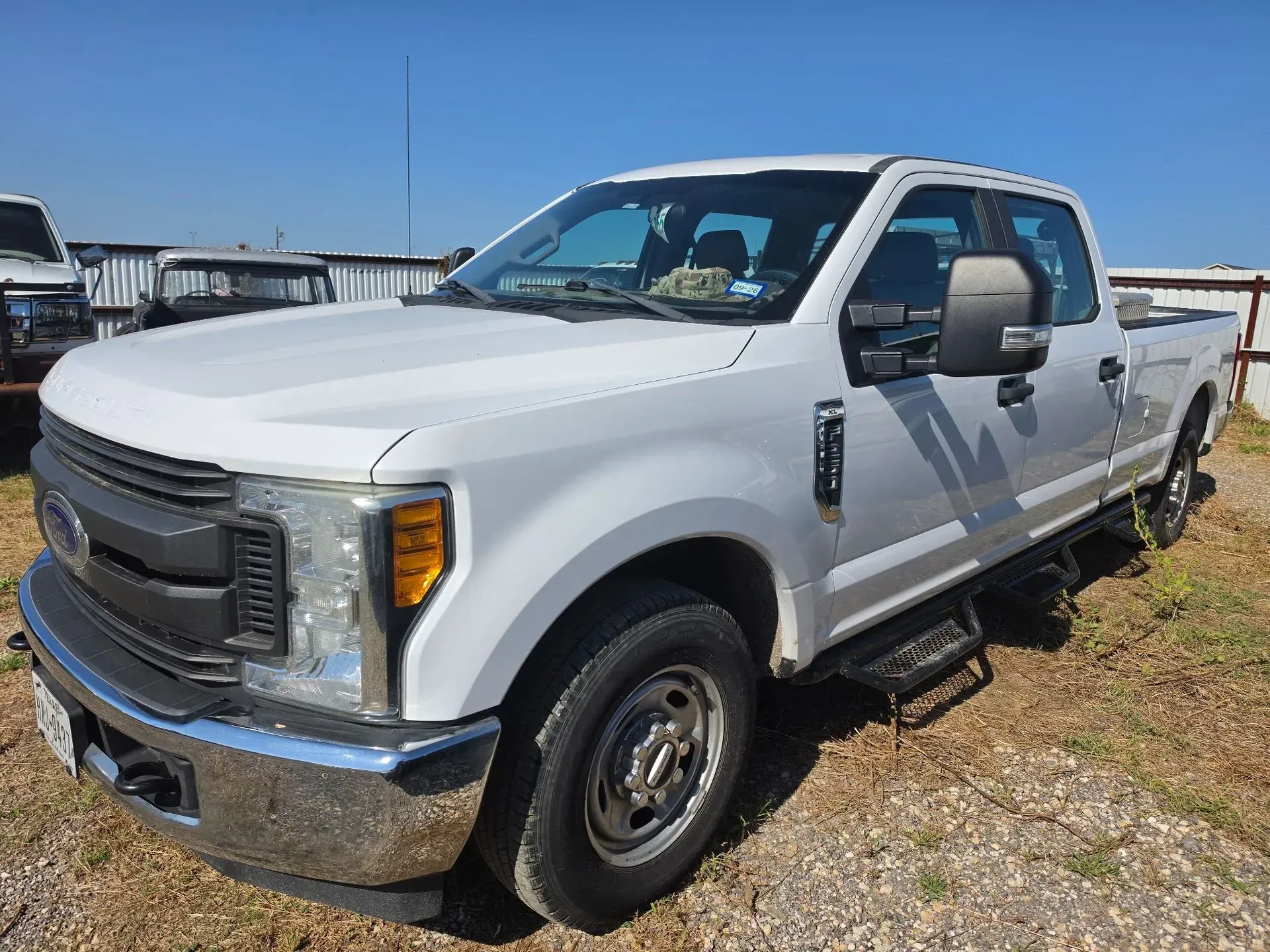
Last week a customer brought us a 2016 Ford F-350 Super Duty with four things wrong with it. The batteries were dead, someone had tried to break into it, it had a death wobble at highway speed, and it wouldn’t start at all. He had one request when he walked in: could we quote him an upgraded fuel tank.
That is not a dumb customer. That is a normal customer. He asked about the thing he’d been thinking about for months instead of the thing that could have hurt him at highway speed, because nobody had ever told him which was which.
Search “mechanic near me” and you’ll find a dozen articles listing ten questions to ask your mechanic. Geico has one. State Farm has one. So do O’Reilly and half the insurance industry. Not one of them has a repair order behind it.
So here’s the version from an auto repair shop in Killeen that has been writing estimates since 2010. In this post you’ll get the two questions we genuinely wish every customer asked, the follow-up that matters more than both, what a good answer sounds like versus a dodge — and real repair orders from our own bays, cited by number instead of by name.
The Two Questions We Wish Every Customer Asked
Most question lists fail for the same reason: every item on them can be answered with a yes or a dollar figure. “How much?” “Is it done?” “Do you warranty it?” A shop can stonewall all three and you’d never know.
These two can’t be answered that way. Both force a shop to either show you its thinking or visibly fumble.
Question 1: “What are my repair options?”
Not “what’s the cheapest way.” Options. The plural is the whole point, because it makes the shop lay out the paths and rank them in front of you.
Here’s what we want to be clear about, because it’s where most people expect this answer to go: at our shop, the options are never cheap parts and workarounds. We don’t offer those, and the reason is both liability and your safety. There’s no version of a worn ball joint where the budget fix is a good idea.
So what are the real options? Usually some combination of these:
- Sequence. What gets fixed today, what waits until the next paycheck, and what order keeps you safe in the meantime.
- Warranty coverage. Dig out your paperwork. Plenty of drivers who bought used don’t know that a factory, extended or dealer-sold warranty is still in force. We’ve had a customer’s transmission covered by a SilverRock policy he didn’t realize he had.
- Repair versus replace the vehicle. Sometimes “don’t fix it” belongs on the menu. We cover how to run that math in our breakdown of the $3,000 rule for car repairs.
- How you pay for it. Financing through Affirm, Snap Finance, Synchrony or Klarna changes the timeline, not the repair.
What a dodge sounds like: a single number and no explanation of how they got there. If a shop can only give you one path and can’t tell you what the other paths would cost you, they either haven’t finished diagnosing it or they’d rather you didn’t compare.
Question 2: “Do you have experience with my specific make and model?”
This one is uncomfortable to ask, and that’s exactly why it works. A shop either produces specifics or it bluffs, and you can hear the difference immediately.
When a customer asks us, we answer with names and numbers. Cody has over a decade with Toyotas and Hondas, including at the high-performance level. Every technician here is ASE certified, two of them at Master Technician level, and one holds ASE’s L1 Advanced Engine Performance Specialist certification — the highest level on the automobile ladder, and the person you want on a driveability problem nobody else can find. We’ve been doing this for 16 years.
The ASE part is worth understanding rather than nodding at. Per the National Institute for Automotive Service Excellence, certification covers nine separate Automobile and Light Truck tests, and “Those who are certified in tests A1 – A8 are recognized as ASE-Certified Master Automobile Technicians.” L1 sits above all of that — you can’t even register for it until you’ve already passed A8, and ASE’s stated purpose for the test is identifying technicians who can diagnose sophisticated driveability and emissions-related problems. Every one of these certifications has to be renewed every five years. “ASE certified” isn’t a sticker a shop buys. It’s eight exams per person, and it expires.
The numbers are checkable, too. We pulled our own records for this post: 365 repair orders across 155 Ford Super Duty trucks, eight of which involved death wobble, track bar or steering damper work. So when that F-350 rolled in, it wasn’t our first one. See the full range in the vehicles we service at Chuck’s Garage.
What a dodge sounds like: “Oh yeah, we see those all the time.” Fine — then ask how many, and what usually fails on them. A shop that actually works on your vehicle can answer that in one breath.
The Follow-Up That Matters More Than Either: “Which of These Is a Safety Issue, and Which Can Wait?”
This is the question that F-350 customer didn’t ask, and it’s the one we’d put first if we could only pick one.
Ask it, and a decent shop will sort your estimate into three buckets: you are not driving this home, next paycheck, and whenever you feel like it. Brakes, steering and suspension live in the first bucket. A fuel tank upgrade lives in the third.
If a shop can’t sort your list that way, that tells you something important. It means either they haven’t inspected the vehicle thoroughly enough to know, or they’re treating your estimate as a menu of equally optional add-ons. Neither is what you want from a mechanic shop in Killeen or anywhere else.
And if the answer puts something in that first bucket, there’s a specific follow-up worth knowing about. We’ll get to it after the F-350.
RO 20944: What That F-350 Actually Needed
Here’s the estimate, in the order we recommended it.
The death wobble, first and absolutely first. It’s a safety concern at highway speed, and it outranked everything else on the list. We don’t start the other work until the safety items are handled, because once that truck is fixed and signed for, it’s going back on the road with a family in it.
The batteries, second. Our tech’s note reads: “Both Batteries Are Flat & Are Swollen.” Swollen is the word that matters. That’s a reliability problem rather than a convenience problem, and it explains why his key and his keypad code both failed to unlock the truck after the attempted break-in. $969.46 for both batteries and the labor.
The fuel tank, last. It’s a want. Wants are legitimate. They’re also third in line behind a steering defect and a no-start.
Four customer concerns on that repair order, two diagnostic jobs, and the thing he came in asking about wasn’t on the critical path at all. That’s not unusual — it’s the normal shape of a visit, and it’s why our estimates name the part, the finding and the tech’s reasoning instead of just a total. Our suspension repair service in Killeen page covers what a death wobble diagnosis involves, and because this one is a 6.7L Power Stroke, it also runs through our diesel repair process.
What Happens If You Decline a Safety Repair
You can decline anything. It’s your vehicle. But there’s a right way for a shop to handle it, and here is exactly what we do — expect something like it from any shop worth using.
When we find a safety concern, it goes on your estimate as its own job line, and the title of that line states the concern and says we do not recommend driving the vehicle. We then ask you to approve that specific line. Not the repair — the acknowledgment. And we recommend a tow out rather than a drive home.
That does two things at once. It puts the shop and the customer on the same page in writing, so there’s no argument six weeks later about who said what. And it makes the decision visible to you, which is the part that matters more. There is a real difference between quietly declining line four of a six-line estimate and signing your name to a line that says this vehicle is not safe to drive.
So this is the question that falls out of it, and it might be the most useful one in this entire post: “If I decline this, will you put the safety concern in writing on my estimate?”
A shop that says yes has a process. A shop that waves you off has just told you that no record of this conversation is going to exist — and that when the part fails, it’ll be your word against theirs.
RO 13933: The Customer Who Asked About Tires
A 2005 F-250 Super Duty Harley-Davidson Edition came in at 158,990 miles. The customer’s stated concern: “Customer had two tires replaced and old ones rotated to front. steering wanders.”
He thought he had a tire problem. He asked about tires. Here’s what our tech found instead, verbatim:
“Front upper balljoint are loose. Recommend lowers at same time. R/f wheel bearing making growling noise. Recommend replace while doing ball joints. Recommend new steering stabalizer shock, Recommend rancho or bilstien quality. Track bar bushing has been separating, recommend new bushing. Front shocks have gotten soft.”
He authorized the ball joints ($1,309.14), the steering damper ($257.50) and the track bar bushing ($155.11). The tech’s closing note: “Performed recommended repairs and aligned vehicle. Test drove. Vehicle no longer wandering.”
He declined two things: the growling right-front wheel bearing ($724.48) and the soft front shocks ($393.86). He hasn’t been back, so we don’t know how that bearing ended up — and we won’t pretend we do.
What we do know is how a declined bearing can go. On a different vehicle, a 2008 Mazda CX-9 at 167,472 miles, the right front wheel bearing came apart in our tech’s hands during disassembly. That’s a bearing that had been making noise for a while.
Notice what the question did here, though. He asked about tires and got a steering and wheel alignment answer, because the diagnosis didn’t match his theory. A shop that only sells you what you walked in asking for is not doing you a favor.
When We Tell Customers No
This is the part nobody puts in a blog post, and it’s the single best signal you can get from a shop.
We’ve turned work away. High-level electric vehicle specialty repairs — not our strength, and high-voltage systems are not something to learn on your car. A catalytic converter job we declined. A muffler delete, which we sent to a specialist exhaust shop that does that work properly.
So ask a shop what they don’t do. A shop that will say “that’s not us, go see these folks” is a shop that will also tell you the truth about your ball joints. A shop that claims it does everything equally well is telling you something too.
The same honesty applies to parts. A customer once supplied his own crate engine for a 2009 Dodge Challenger to keep the bill down, no warranty by agreement. It went in correctly and wouldn’t start — the engine was missing its MDS sensors and its engine code came from a 2015-or-newer vehicle, so the reluctor wheel was wrong and it produced no crank signal. We wrote up the longer version of that lesson in are cheap online car parts safe to use.
Frequently Asked Questions
What questions should I ask a mechanic before authorizing repairs? Ask for your options and their order, ask which items are safety issues versus ones that can wait, and ask what the warranty covers on both parts and labor. Get it in writing before you approve anything.
How do I know if a repair is urgent or can wait? Ask the shop to sort the estimate into safety, reliability and preference. Anything touching brakes, steering, suspension or tires belongs in the first group and shouldn’t be deferred on a vehicle you’re still driving. If you do decline a safety item, ask the shop to document it as its own line on the estimate and have you sign it, so the decision is on the record.
Should I ask to see the old parts? Yes, and a good shop will offer before you ask. Even when a part is too heavy, leaky or messy to take home, you should be able to look at it and have the failure pointed out to you.
Is it rude to ask for a second opinion on a big repair? Not at all, and we’d rather you did than authorize something you don’t understand. A shop that gets defensive about a second opinion has answered a different question for you.
Should I ask whether the technicians are ASE certified? Yes — and follow up on the level. Master Technician status means eight separate ASE exams, and the L1 Advanced Engine Performance Specialist certification sits above that and can’t even be attempted until A8 is passed. Certifications have to be renewed every five years, so “certified” with no date behind it is worth a second question.
Pros and Cons of Walking In With a List of Questions
Pros
- It forces the shop to show its work. Open-ended questions can’t be answered with a number, so you learn how a shop thinks rather than just what it charges.
- It separates safety from preference. The most valuable thing you can walk out with is knowing which line items you can defer without risk.
- It surfaces the warranty question early. Asking about coverage before you authorize is how drivers find out a repair is already paid for by a policy they’d forgotten.
- A “no” is useful information. When a shop admits something isn’t their strength and refers you elsewhere, you’ve learned more about them than any five-star review could tell you.
Cons
- A list can’t triage. Our F-350 customer had perfectly good questions about fuel tanks. Questions only help if they’re pointed at the right problem, and working out which problem that is takes an inspection.
- Every question assumes the diagnosis is correct. A perfect answer built on a wrong diagnosis is just a confident wrong answer, which is why skill matters when you’re paying for a diagnosis.
- The wrong question invites the wrong answer. Ask for the cheapest fix that technically works and some shops will find you one. We won’t, and you shouldn’t want us to.
- You can’t verify a credential at the counter. Anyone can say the word “certified.” The follow-ups — which tests, how recently, which tech is working on my car — are where the real answer lives.
- No question replaces time on a lift. The F-250 owner asked about his tires in good faith. It took a technician underneath that truck to find loose ball joints, a separating track bar bushing and a growling bearing.
Why Killeen Drivers Trust Chuck’s Garage With the Hard Questions
Ask us anything on this list. The notes quoted throughout this post are the same documentation every one of our customers gets — the part, the finding, and the tech’s reasoning in plain language, not a line item and a total.
Since 2010, our ASE-certified team has been the shop Killeen turns to for auto repair, with a 4.8-star Google rating, a BBB A+ rating and Ambassador-level membership in the Killeen and Harker Heights Chambers of Commerce. We serve working families, contractors and Fort Cavazos soldiers across Killeen, Harker Heights and Copperas Cove. Across 14,483 posted repair orders through October 2026, our median ticket is $294.41 — most visits land nowhere near the numbers in this post.
Not sure yet whether you’re facing a $300 problem or a $3,000 one? Start with our free No Wrench inspection, a visual check with no teardown. If the car won’t move, our free towing integration with Bill’s Towing gets it here. We handle your Texas state inspection — what plenty of folks still search as a smog check — and we offer a pre purchase inspection before you buy, which is the cheapest set of questions you’ll ever get answered. Every repair is backed by our 5-year/unlimited-mileage warranty. New to us? Read what to expect when taking your car to a mechanic in Killeen and how to find a mechanic that won’t rip you off.
Searching mechanic killeen tx, car repair killeen, auto mechanic near me or garage near me? You just found an auto repair shop that answers the question you didn’t know to ask.
Bring Us Your Questions
Don’t find out which repair was the urgent one after something lets go at 60 miles an hour. Bring it to Chuck’s Garage, Killeen’s trusted ASE-certified auto repair shop, and we’ll tell you what’s wrong, what your options are, and what has to happen first. Call 254-554-5445 today or stop by. We’ll get you back on the road.